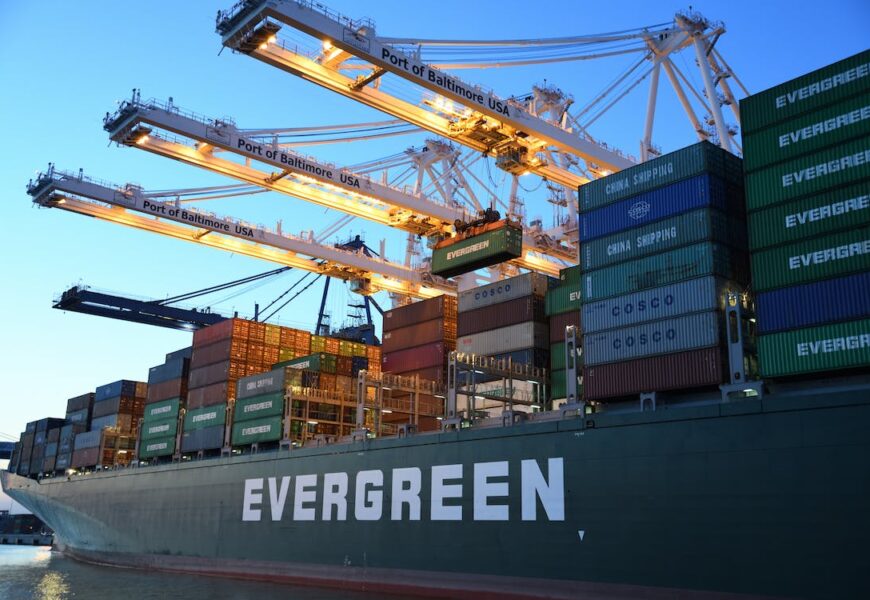
The choice to work with a 3PL or 4PL should be based on the services needed by your business. Assess the range of logistics services you need, including transportation, warehousing and distribution.
Choosing the right logistics provider will allow you to save time and money, focus on your core business and uncover new efficiencies.
Benefits
When an enterprise hires a 3PL, it retains management oversight but outsources execution of transportation and logistics services. 3PLs can provide additional value-added services such as crating, boxing and packaging to streamline the supply chain and reduce overhead costs. The ability to scale and customize service offerings means a 3PL can meet your specific needs, providing greater flexibility and agility. For example, a manufacturer of ODB2 scanners can work with a 3PL to move raw materials from China to the manufacturing plant, avoiding the need to hire in-house staff and relying on existing relationships to save time and money.
A 3PL can also help a business enter new markets with low capital investment and rapid implementation. They have experience and expertise in the transportation and logistics industry and can offer cost savings through negotiating discounts from trucking companies, freight brokers and suppliers of logistics software and hardware. This allows the enterprise to focus on its core business, while minimizing risk and increasing efficiency.
Another benefit of a 3PL is that they can handle all aspects of the supply chain, including logistics process improvement and inventory management. This enables the enterprise to gain better data visibility of all logistics operations and makes it easier to meet customer delivery expectations. A good 3PL provider will provide reporting, analysis and EDI services to ensure accurate information is shared with customers and vendors.
4PLs typically offer more services than 3PLs, and they also take on a broader role in the supply chain. This includes freight forwarding and origin consolidation, which involves taking products from different warehouses and redistributing them to eCommerce retailers in a central location. A 4PL can also manage supplier relationships and impose operational discipline to improve the overall supply chain performance of a client.
A 4PL can also manage a network of 3PLs and other service providers, so they are able to coordinate all logistics activities in the network for greater efficiency. This is especially helpful for large enterprises that have multiple locations and are looking to cut down on delivery costs and improve customer satisfaction. A 4PL can also be a valuable partner in optimizing the entire supply chain by leveraging technology, strategic partnerships and data to identify and implement improvement opportunities.
Operational Efficiency
Choosing a logistics partner is important for any company. There are many factors to consider, including the types of services needed and the costs associated with those services. It is also critical to understand the differences between 3PL and 4PL. For example, a 3PL typically owns and operates assets like trucks and warehouses while a 4PL does not. While this difference may seem minor, it can have a significant impact on the overall effectiveness of a logistics partnership. We like Good Firm as a logistic company resource since they are reliable and well-known in the field.
Companies often turn to 3PL providers when their supply chain becomes too complex to manage effectively in-house. They may have grown through mergers or acquisitions, or they may have outgrown the capabilities of their in-house logistics team. 3PLs can offer cost-effective solutions and improve operational efficiency by leveraging their expertise in warehouse management, transportation operations and distribution networks.
For companies that require a higher level of logistical service, a 4PL may be the right choice. Unlike 3PLs, which focus on the physical movement of goods, 4PLs coordinate and oversee the logistics processes of third-party providers for seamless integration of supply chain management functions. They also focus on optimization and strategic development, while 3PLs tend to focus on day-to-day operations.
The major benefit of a 4PL is that it offers clients a “control tower” view of their supply chains. This allows them to coordinate and optimize logistics processes with other third-party partners without the risk of overlapping asset ownership or the expense of operating their own assets. For instance, a 4PL can distribute inventory for an e-commerce retailer across multiple warehouses in strategic locations to meet customer shipping expectations for a two-day delivery window. This type of distribution strategy is often referred to as the Amazon effect, and it has become an expectation for consumers that nearly anything can be delivered in two days or less.
As a result, e-commerce retailers must develop logistics strategies to compete with this new standard of consumer expectation. A good 4PL can help a business optimize their supply chain to better meet and exceed these expectations, while freeing up internal resources to invest in growth and innovation.
Asset Ownership

In some cases, 3PL providers own their own fleet of trucks, warehouses and distribution centers. In these cases, they can offer a more cost-effective solution than 4PL companies who do not own their own assets. 4PL companies, on the other hand, are often non-asset based and work with various partners to manage supply chain operations. This means that they can provide more comprehensive services with a lower price point and higher flexibility.
When choosing a logistics provider, consider your business size and supply chain complexity to determine which option is best for you. Smaller businesses that need to focus on day-to-day operations may find that a 3PL provides the right solutions, while larger enterprises with more complex supply chains require the complete management offered by 4PLs.
Both 3PLs and 4PLs have industry experience that can help you achieve greater efficiency and reduced costs in your logistics processes. They also use data and analytics to optimize your supply chain and provide more streamlined, effective shipping service for your customers. They can also help you improve your logistics practices to make it easier for you to meet the growing expectations of today’s consumers, who are used to receiving products quickly and conveniently.
A 4PL can design and build a solution that meets your specific needs with their expertise in end-to-end supply chain operations, such as warehousing, distribution, transportation and inventory management. This can include a single view of inventory and performance metrics across the network, providing merchants with more visibility into their fulfillment operation.
For example, a 4PL can handle the logistical tasks of moving products from a factory to multiple distribution centers for shipping, allowing the manufacturer to concentrate on its own core business. Then, the 4PL can coordinate and oversee a mix of 3PLs, carriers, brokers, freight forwarders and warehouses to deliver the product to customers on time.
With the rise of omnichannel customer demands, retailers need to be nimble and adapt their logistics strategies to compete with large online players. A 4PL can provide a more comprehensive solution by optimizing the network to include smaller warehouses near customer centers, for instance, rather than one million-square-foot regional distribution center that requires costly infrastructure investments.
Relationship with Clients
3PLs work with clients as transactional partners, focusing on specific logistics tasks. By contrast, 4PLs collaborate with their clientele as strategic partners to find continuous improvements in logistics processes and identify opportunities for cost savings. In addition to providing a complete solution to all warehouse and transportation needs, 4PLs also work with other logistics partners—including 3PLs and carriers—to optimize the supply chain.
For example, if you need to move goods from China to your distribution center in Long Beach, CA, a 4PL can manage all aspects of the shipment process, including working with freight forwarders and arranging for shipping containers to be loaded onto ships headed to California. They can also synchronize and oversee logistics activities performed by other 3PLs, providing a single point of contact for real-time information and communication.
By reducing operational costs, eliminating the need for your business to own and operate its own distribution center, and providing improved customer service and fulfillment capabilities, the right third-party logistics (3PL) provider can help your company achieve its growth goals.
In a world where customers have come to expect fast and reliable delivery of merchandise, the ability to fulfill orders quickly and accurately is crucial. That’s why so many companies turn to third-party logistics (3PL) providers to improve and enhance their logistics operations.
Whether you’re a small, medium, or large-sized enterprise, the best third-party logistics (3PL) provider for your business will be one that understands and supports your unique operational needs. It will have the experience and resources to develop and implement a logistics strategy that meets your specific requirements—and provides the flexibility and scale you need as your business grows.
A 4PL, also known as a lead logistics provider (LLP), does not own warehouses or transportation assets and instead coordinates the services of multiple 3PLs to optimize the overall supply chain for its clients. This is done through a combination of specialized knowledge and technology. 4PLs use their high level of visibility, real-time information, communication abilities and broad knowledge to align 3PLs, customers and service providers for seamless supply chain management and optimization.